

Should I Opt Out Of Sonoma Clean Power To Save Money 2017
Community Pick Aggregation (CCA), also known as Community Choice Energy, municipal aggregation, governmental aggregation, electricity aggregation, and community aggregation, is an alternative to the investor owned utility energy supply system in which local entities in the Us aggregate the buying power of individual customers inside a defined jurisdiction in order to secure alternative free energy supply contracts.[1] The CCA chooses the power generation source on behalf of the consumers.

By accumulation purchasing power, they are able to create large contracts with generators, something individual buyers may be unable to do. The master goals of CCAs have been to either lower costs for consumers or to allow consumers greater control of their energy mix, mainly by offer "greener" generation portfolios than local utilities. Eight states in the U.s. accept enacted CCA enabling police. They are: Massachusetts, Ohio, California, Illinois, New Jersey, New York, Rhode Island, and Virginia. Collectively, they serve about 5% of Americans in over 1300 municipalities equally of 2014.[2]
How CCAs role in electricity distribution [edit]

Figure ane: How CCAs interact with utilities and consumers[3]
CCAs are local, non-for-profit, public agencies that have on the decision-making function about sources of free energy for electricity generation. Once established, CCAs become the default service provider for the power mix delivered to customers. In a CCA service territory, the incumbent utility continues to ain and maintain the manual and distribution infrastructure, metering, and billing.[4] The municipality initiating the CCA sets upward a governing board, usually made upwardly of local elected officials, which makes cardinal decisions about procurement, rates, and what local energy programs to fund.[v]
Renewable energy significance [edit]
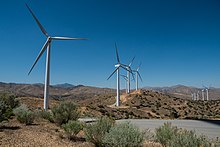
CCAs have set up a number of national greenish power and climate protection records while reducing power bills, a rare combination that has won National Renewable Free energy Laboratory (NREL) and Ecology Protection Bureau (EPA) recognition for achieving significantly higher renewable energy portfolios while maintaining rates that are competitive with conventional fossil and nuclear-based utility power. Several major U.S. population centers nether CCA have switched to free energy portfolios that are an social club of magnitude greener than local utilities or other directly access providers, just charge no premium to a higher place utility or direct access rates. CCAs are therefore already conspicuous leaders in dark-green power innovation, receiving U.Due south. Environmental Protection Agency'due south "green power leadership awards" for achievements in renewable energy (MCE Make clean Energy; Oak Park, IL, Cincinnati, OH). Past 2019 Sonoma Clean Ability was providing 91% carbon-free ability and had accepted 2,000 customers into its premium EverGreen Service, providing 100% renewable energy from local solar panels and geothermal plants. Additionally, information technology plans to own and manage 6 solar plants in the Petaluma area.[6]
Nationwide, just xiii% of CCAs offering "green ability," every bit their primary focus is to reduce electric power costs to their customers. California CCAs lead in offering renewable electricity considering they are and then required by state law. However, CCAs in California voluntarily purchase renewable energy at levels that exceed renewables portfolio standard (RPS) mandates. Between 2011 and 2018, CCAs in California directly procured 24 terawatt-hours (TWh) of RPS-eligible electricity, of which 11 TWh is voluntary or in excess of RPS compliance, according to the UCLA Luskin Center for Innovation.[7] Further, of the 72 cities and counties that are powered by 100% clean energy in the U.S., 64 are in California and are members of a CCA.[8] In New York state, about 50% of the only active CCA sales are dark-green. An boosted 90 CCAs in Illinois, Mass. and Ohio provide renewable energy; but most CCAs do not offering voluntary renewable energy equally a default free energy product.[9]
Policy basis for CCAs [edit]
In the Usa, CCAs are permitted in eight states: Massachusetts, Ohio, California, Illinois, New Bailiwick of jersey, New York, Rhode Island, and Virginia. States must first pass legislation allowing for the formation of CCAs earlier an bureau can course. So far only deregulated states (meet electric deregulation) accept enacted CCA legislation.[10] This is a natural progression every bit electricity deregulation separates the functions of electricity generation from transmission and distribution allowing consumers to choose their electricity generator. This separation then allows for CCAs to choose the electricity generation mix on behalf of consumers without having to constitute the infrastructure to move electricity. Even so, simply 17 states and the Commune of Columbia have deregulated markets.[11] The remaining 33 states are considered regulated, where utilities retain a monopoly on generation, manual, and distribution of electric ability.[11]
| Legal Potency for Customs Pick Aggregation[12] | |||
|---|---|---|---|
| State | Yr | Authorizing Legislation | Authorizing Legislation Name |
| Massachusetts | 1997 | M.G.L. ch.93A §i | Utility Restructuring Act of 1997 |
| Ohio | 2001 | Local Ballot Measure out | North/A |
| California | 2002 | Assembly Neb 117 | Electrical Restructuring: Assemblage |
| Illinois | 2002 (residential) | 220 ILCS 5/Art. Xvi | Electric Service Customer Pick and Rate Relief Police force of 1997 |
| New Jersey | 2003 | Associates Nib 2165 | Government Energy Aggregation Act of 2003 |
| New York | 2016 | PSC Case 14-M-0224 | Lodge Authorizing Framework for Community Choice Aggregation Opt-Out Program |
| Rhode Island | 1996 | RIPUC No. 8124 | Utility Restructuring Act of 1996 |
Early on days [edit]
In Massachusetts, where the nation's start CCA bill (Senate 447, Montigny) was first drafted by Massachusetts senate energy committee director Paul Douglas Fenn in 1995[13] and enacted in 1997,[fourteen] the locales of Cape Cod and Martha's Vineyard formed the Greatcoat Calorie-free Compact and successfully lobbied for passage of the seminal CCA legislation. Two of the Cape Light Compact founders, Falmouth Selectman Matthew Patrick and Barnstable County Commissioner Rob O'Leary, were afterward elected to the Massachusetts House of Representatives and Senate respectively. Between 1995 and 2000, Fenn formed the American Local Power Project and worked with Patrick to typhoon and pass similar laws in Ohio, New Jersey, and other states.[fifteen]
Massachusetts [edit]
The nation's kickoff CCA, the Cape Light Meaty, currently serves 200,000 customers, running ambitious and transparent energy efficiency programs and installing solar installations on Cape Cod schools, burn down stations and libraries.[16]
Equally of March 2019, about 150 Massachusetts cities and towns take adopted community pick assemblage, including Boston and Worcester.[17] [18]
Ohio [edit]
In Ohio, the nation'southward largest CCA was formed in 2000 when the state legislature adopted a CCA law that formed the Northeast Ohio Public Energy Council (NOPEC),[nineteen] made up of approximately 500,000 customers in 112 cities and towns beyond 8 counties, procured a power supply contract that switched electric generation fuel supply from a mix of coal and nuclear power to a mix of natural gas and a modest per centum of renewably powered electricity, and announced a lxx% air pollution reduction in the region'due south power mix. Different California CCAs, NOPEC offers both electrical power(510,000 customers) and natural gas (400,000 customers).[twenty] The council has grown to 228 communities in 14 counties.[21]
In 2020, Ohio'south capital Columbus canonical a city-wide election measure, giving it an electricity aggregation plan which will supply it with 100% renewable energy by the beginning of 2023. Its vendor, AEP Energy, plans to construct new wind and solar farms in Ohio to aid supply the electricity.[22]
California [edit]
Overview [edit]
In 2002, California State Legislature enacted Assembly Beak 117, setting the foundation for Community Pick Aggregation in California.[23] The bill recognized that as local, non-for-profit service providers, overseen past their local elected officials, CCAs are the preferred default service provider in their service territory. So CCA law mandated that customers be automatically enrolled in their local CCA, with the ability to opt out at any time to remain a "bundled customer" with their incumbent utility. The police likewise makes the clarification that, in California, CCAs are by legal definition non utilities, and are legally divers in California constabulary as non-for-profit electric service providers.[ii]
After passage of AB 117, two years of rulemaking followed at the California Public Utilities Commission. The fundamentals of CCA regulation are contained in this dominion-making that occurred between 2003 and 2005:
- Phase 1 Decision: December 2004: Implementing Portions of AB 117 Concerning Community Choice Assemblage[24]
- Phase 2 Decision: December xv, 2005: Decision Resolving Stage 2 Issues on Implementation of Community Choice Aggregation[25]
Upon completion of this rulemaking process, CCA became available to local governments in late 2005.
In the early days of the California free energy crisis, Paul Fenn, the Massachusetts Senate Energy Committee managing director who conducted the legal enquiry and drafting of the original CCA legislation, formed Local Power Inc. and drafted new CCA legislation for California.[26] In a campaign organized past Local Power, the City and Canton of San Francisco led Oakland, Berkeley, Marin County, and a group of Los Angeles municipalities in adopting resolutions asking for a state CCA law in response to the failure of California's deregulated electricity marketplace. Fenn's bill was sponsored by then Assembly Fellow member Carole Migden (D-San Francisco) in 2001, and the bill became police force (AB117) in September 2002.[27]
CCA formation in California was delayed by initial political opposition by the state's investor-owned utilities. In June 2010, Pacific Gas & Electrical sponsored a ballot initiative, Proposition 16, to make it more than hard for local entities to form either municipal utilities or CCAs by requiring a two-thirds vote of the electorate rather than a simple majority, for a public agency to enter the retail power business.[28] Although PG&E spent over $46 million in an attempt to laissez passer the initiative Prop 16's opponents, a wide coalition led past grassroots clean energy activists, Local Power Inc., and The Utility Reform Network, raised and spent less than $100,000,[29] [30] Proposition sixteen was defeated.
San Francisco adopted a CCA Ordinance drafted by Fenn (86-04, Tom Ammiano) in 2004, creating a CCA program to build 360 Megawatts (MW) of solar, green distributed generation, wind generation, and energy efficiency and demand response to serve San Francisco ratepayers using solar bonds.[31] Specifically, the ordinance combined the power purchasing authority of CCA with a acquirement bond authority as well adult by Fenn to expand the power of CCA, known as the H Bond Dominance (San Francisco Charter Section 9.107.8, Ammiano), to permit the CCA to finance new green power infrastructure, worth approximately $i Billion. In 2007 the City adopted a detailed CCA Plan also written primarily by Fenn (Ordinance 447–07, Ammiano and Mirkarimi), which established a 51% Renewable Portfolio Standard by 2017 for San Francisco.[32] Over the following decade, Sonoma and San Francisco worked with Fenn's company, Local Ability Inc. on programme designs focused on achieving energy localization through renewables and energy efficiency.[33]
Inspired by Climate Protection efforts, CCA has spread to cities throughout the Bay Expanse and the country. In 2007, forty California local governments were in the process of exploring CCA, virtually all of them seeking to double, triple or quadruple the light-green power levels (Renewable Portfolio Standard, or "RPS) of the state's three Investor-Owned Utilities. As of November 2020, there are 23 CCAs serving the energy needs of more than 10 million customers in more 180 cities and counties throughout California, and more are expected to have CCA service in 2020-2021 as new programs launch and existing programs expand.[34]
In April, 2014, Assemblymember Steve Bradford (D-Gardena) introduced legislation (AB 2145) that would sharply limit the ability of CCAs to enroll customers. CCA advocates and a wide coalition of local governments, business concern, and environmental system rose up in opposition and defeated AB 2145.[35] AB 2145 passed in the California Assembly but died in the Senate on August 30, 2014, when the Senate's legislative session was ended without information technology coming up for a vote.[36]
New renewable development [edit]
The California Renewables Portfolio Standard (RPS) is a standard established past the Country of California that requires electricity service providers in the State to include certain minimum levels of defined renewable energy in their ability mixes.[37] In California all CCAs come across or exceed these minimum standards.[38]
CCAs are regulated past their local governing boards, which are mostly fabricated upwardly of local regime elected officials. In addition, CCAs must comply with State and federal regulations that apply to them. They engage with numerous state and federal agencies, including their regulatory overseer, the California Public Utilities Commission, and as well the California Air Resources Board, California Energy Committee, and the Federal Energy Regulatory Committee.[39]
CCAs are well established in California with the start one having launched service in 2010. As of January 2020 there were 21 operational CCAs[40] in California serving over 10 1000000 customers.[41] CCAs are responsible for over 3,000 megawatts of new renewable energy in California, including solar, air current, and bioenergy.[42] They are the primary procurers of California renewable energy portfolio-eligible renewable energy in the State.
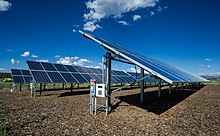
All CCAs in California are entering into contracts for new renewables. In 2018, six of xix California CCAs had Power Buy Agreements for new renewables, accounting for approximately ten% of CCAs total load and ane.half dozen% of California's total load assuming an average 30% capacity factor for all types of renewable technologies.[43]
Power Charge Indifference Adjustment [edit]
Other issues that can arise from the evolution of community selection assemblage include the evolution of exit fees, specifically in the state of California. This is an effect for CCAs in the state of California because it allows Investor-endemic utility (IOU) to raise prices through a Power Charge Indifference Aligning (PCIA) or exit fee,[44] [45] making information technology more than expensive for customers to join CCA programs because at that place will be a fee to customers when they cull to stop using bundled services provided by their utility provider and start using a CCA program. The exit fee, which typically is charged for five years, is applied to each kilowatt-hr of electricity consumed by the customer and shows up as a separate accuse CCA customers' monthly bills. In California, it has been difficult to determine the appropriate exit fee to customers who remain at the incumbent utility are not paying more than than their fair share for these long term services, which has acquired exit fees to change rapidly. Leave fees in Pacific Gas & Electric's service area decreased by 62 per centum from 2012 to 2013, only to spike by 211 percentage from 2013 to 2016 and increase again in a 2018 CPUC gild.[46] The chief issues revolving PCIA is the transparency of the program, accountability of the agencies, and proper valuation of costs associated with the exit fees. Exit fees are put on CCA users to compensate for the cost that would be put on those remaining with IOU services.[46]
The PCIA has tended to be very volatile and uncertain due to policy and regulatory debates on what level of leave fees is "fair" for both IOU and CCA customers. For instance, the PCIA for PG&Eastward decreased past 62% from 2012 to 2013 and increased by 211% from 2013 to 2016.[46]
Costs such every bit the exit fees and increased rates can be a disadvantage as CCAs can raise prices for customers. Charge per unit setters and local officials can set CCA prices which can be a disadvantage if local authorities acts on their own self-interest or if local authorities lacks the cognition to make decisions about CCA and prices in their localities.[47]
In October 2018, afterwards working on this effect for a year, the regulators at the CPUC appear their conclusion to continue and increase the cost of PCIAs to insure that IOU customers are not left with excessive energy costs due to the defection of customers to CCAs. The charge per unit impact those leaving for CCAs was expected to be a 1.68% increase to those customers leaving PG&E; 2.5% increase on Southern California Edison defectors and 5.25% on customers departing SDG&Due east.[48] The pick to opt out can be a benefit for customer choice merely it can as well exist a adventure for CCA programs because if there are many customers choosing to opt out of the services, this tin can result in fiscal instability among the CCA.[49]
Procuring power and the office of energy marketers [edit]
Some Community Selection Aggregators hire third-political party consultants with experience in energy markets to procure and schedule power.[50] This may be particularly necessary with newer CCAs who are still staffing upward and lack credit ratings;[51] as such they are non able to finance the building of their own generation assets.[52] CCAs are continuing to earn investment-grade credit ratings from the likes of Fitch, Moody'southward, and Southward&P; Key Coast Community Energy, CleanPowerSF, MCE, Peninsula Clean Energy, and Silicon Valley Clean Energy all have investment-grade credit ratings,[53] and other CCAs are pursuing them.[54]
Ane of the advantages a CCA tin can offer is its focus on local jobs cosmos and support of local free energy resources.[55] Simply, because of the mandate to provide ability at a low cost, CCAs in California have by necessity contracted with multinational and fossil-fuel reliant corporations such every bit Shell, Calpine Energy Direct Energy and Constellation (a subsidiary of Exelon).
Energy resource stability and Provider of Last Resort [edit]
Equally of 2017, CCAs in California have some resource adequacy requirements, but the incumbent utility remains the Provider of Last Resort (POLR).[56] As CCAs proliferate in California, there is contend and business over who takes on the POLR responsibility if a CCA fails. Some investor-endemic utilities have indicated a desire to stop purchasing and selling electricity, and if incumbent utilities are no longer in the business of providing power, information technology may no longer be feasible for them to provide this backstop.[57] Private CCAs differ on whether they desire to or are capable of taking on this responsibleness.
The CPUC has released a study called the "Green Book," which is reminiscent of the agency's "Blue" and "Yellow" Books in 1993, which led to California's deregulation and subsequent energy crunch in the early 2000s. The substance of the "Green Book" is to call for thoughtful and comprehensive energy planning to aid the country both run across its renewable source energy goals and avert the turmoil of deregulated and fragmented energy supplies and suppliers.[58]
In that location are crucial trends, pointed out the CPUC, that threaten California'due south iii pillars of energy policy: reliability, affordability and deep decarbonization. The first trend revolves on fragmented decision making. Nine CCAs provided energy to consumers in 2017; there are 21 today. By the mid-2020s, 85% of power in California could be provided past new entities, unlike from those providing ability in 2019. Tendency 2 is poorly planned and organized procurement of the resource needed to ensure reliability. The third tendency is ignoring the potential that customers might lose power service if their electric provider fails, as did some in the crisis of the early on 2000s. Critics responded that grim predictions and unclear recommendations in the Green Book are not substantiated.[59]
Risks involved in power system fragmentation [edit]
System fragmentation puts the state closer to a reliability adventure of non meeting its make clean energy targets: California has 40 Load Serving Entities, which include nineteen CCAs. The rise of CCAs has fractured the part of California's three large regulated utilities as the master providers of the state'due south filigree reliability needs, and CCAs are not doing the blazon of resource adequacy planning needed to keep the arrangement stable as it decarbonizes.[60]
Equally the state's free energy organization becomes increasingly fragmented, regulators and policy makers are expressing concerns virtually resource adequacy to keep the system reliable and whether the state will meet its goal to have 100% clean energy by 2045. A recent report from a California administrative police force approximate analyzing Integrated Resources Plans washed past all load serving entities noted that: "Because the majority of new resources in California are expected to be acquired by CCAs in the next decade, this puts additional focus on their contributions to the IRP process. Very concerning overall is the attitude displayed by some CCAs with respect to the IRP procedure in general. Several CCAs asserted the primacy of their voluntary plans canonical by their local governing boards over the Commission's IRP process, and argued that the Commission's IRP processes practise not fit with their individual resource procurement plans. This demonstrates the crux of the trouble the Country will face in coming years as more and more load is served past non-IOU, and specifically CCA, providers."[61]
The upshot has become so pressing that the California Legislature is because a bill (AB 56, in committee in September 2019) to give the CPUC the ability to task an existing state bureau to serve as a backstop for procurement of electricity to meet the state's climate, clean energy, and reliability goals.[62]
Client pick in California [edit]
California CCAs typically offer customers several free energy programs to cull from - a default program (Ordinarily an energy mix like to that provided by the incumbent utility), a program based on solar energy and a more expensive, 100% Renewable plan. This renewable program is backed by unbundled Renewable Energy Credits (the customers cannot link the power they are buying to a specific renewable resource.). In 2018, these programs ranged from 37% to 100% renewable, with a statewide average of 52 percent.[63] CCAs may as well offer solar rebates and cyberspace metering, and some provide electric vehicle rebates for income-qualifying customers.
Some of the offerings past CCAs may run into the standards set by Green- E. For example, Marin Make clean Energy offers a "Light Green," a "Deep Green," and "Local Sol Programme"[64] where simply the Deep Greenish and Local Sol options are Dark-green- E certified. Dark-green-eastward certified are programs that are regulated and determined to meet a specific criteria and standards established by Greenish- East, adult by the nonprofit organization Center for Resource Solutions.[65]
CCA rates and consumer protection [edit]
Whether a CCA offers lower or higher rates than its incumbent utility is based on the size of the PCIA (go out fee), whether the incumbent utility changes its rates,[66] [67] and the specific "Renewable Energy" package the customer wants. CCA websites ordinarily compare the CCA'southward rates to that the incumbent utility. For case, Clean Power Alliance 2019 rates are one-2% cheaper (for the 36% clean power) than Southern California Edison and vii-nine% higher (if customers choose the 100% clean ability, which uses unbundled Renewable Energy Credits).[68]
The CPUC cannot adjudicate customer complaints betwixt CCAs and customers because they exercise non have oversight over the CCA on consumer protection issues. This responsibleness falls with the CCA Board of Directors. In addition, given that CCAs are not regulated through the CPUC similar IOUs, there is no visibility regarding price allocations amidst dissimilar customer classes.[69]
Marin Clean Free energy offers x different rate packages. When comparing its E-1 packet with that of PG&E, the MCE Light Light-green (50% renewable) rate is .047% (six cents) cheaper than the PG&E charge per unit. If the customer chooses the MCE Deep Green (100% renewable) bundle, the PG&E Solarchoice (100% renewable) package is i.two% ($1.63) less than the MCE rate. The nine other MCE packages compare closely.[70]
Employment and union relations [edit]
In California, CCA customers remain customers of the investor-owned utilities (IOUs). That's because CCA customers continue to receive a range of services from the incumbent utilities. Equally Pacific Gas & Electric notes: "It'south important to remember that if a customer becomes a CCA customer, they are however a PG&E customer. We continue to deliver the electricity to CCA customers through our transmission and distribution organization, and provide meter reading, billing, client service and maintenance services." [71]
The vast majority of IOU employees provide transmission and distribution system maintenance and upgrades for electricity lines, billing and customer service—all of which the IOUs proceed to provide. New jobs have been created constructing and operating clean energy generation facilities for free energy suppliers of CCAs, and providing call center and other services for CCAs.
CCAs in California support union jobs and wages by signing power purchase agreements with new energy facilities that are congenital with union labor. CCAs have signed contracts with new renewable energy facilities totaling more than 3,600 megawatts.[42] Some of the unions/trades participating in construction of new renewable projects include: Carpenters (Local 152), IBEW (Local 11), IBEW (Local 47), IBEW (Local 100), IBEW (Local 125), IBEW (Local 184), IBEW (Local 302), IBEW (Local 551), IBEW (Local 595), IBEW (Local 684), IBEW (Local 1245), Ironworkers (Local 155), Ironworkers (Local 416), Ironworkers (Local 433), Atomic number 26 Workers (Local 378), Laborers (Local 294), Laborers (Local 300), Laborers (Local 324), Laborers (Local 1130), Millwrights (Local 102), Operating Engineers (Local 3), Operating Engineers (Local 12), Plumbers and Pipefitters (Local 228), Teamsters.[72]
CCA call centers throughout the land are also staffed by matrimony workers. For example, call center representatives at Energy Choice California elected to join IBEW 1245 in May 2018. ECC is a adult female-endemic business organization which handles call center work for Calpine Energy Solutions.[73] Calpine provides data management and client contact services for 17 of 21 CCAs in California.
Labor unions have criticized CCAs for non supporting and instigating local job growth, reducing matrimony jobs, and contracting with power providers who apply non-matrimony labor. CCAs tend to utilize fewer employees than IOUs and contracts with large multinational corporations are primarily fulfilled through the utilize of non-spousal relationship labor. For instance, The Western Labor and Management Public Diplomacy Committee (Western LAMPC) has raised concerns about CCAs in California and their relationships with union labor. The committee censured MCE for its contracts with large, multi-national energy providers like Crush, stating that MCE purchases most of its free energy from out-of-state not-union corporations. Information technology also reprimanded Sonoma Make clean Power for its contracts with Constellation Ability and Sonoma's unwillingness to provide firm commitments to local projects.[74]
San Diego's two locals of the International Brotherhood of Electrical Workers (IBEW) have expressed business concern over the possible loss of union jobs equally San Diego forms its own, new CCA. The matrimony wants marriage-scale wages, involvement in any construction projects and an opportunity to unionize workers in the new CCA. Electrical union workers in the Los Angeles area have canonical the CCA concept, as long as union jobs remain available.[75]
California CCAs [edit]
Marin Make clean Energy [edit]
Marin County launched California's first CCA plan, MCE, on May seven, 2010, offer lx%-100% renewable energy at competitive and stable rate significantly reducing energy-related greenhouse gas emissions and enabling millions of dollars of reinvestment in local energy programs. MCE is a load-serving entity supporting a ane,000 MW superlative load. The CCA provides electricity service to more than 480,000 customer[76] accounts and more than than 1 1000000 residents and businesses in 34 member communities across four Bay Area counties: Contra Costa, Napa, Marin and Solano.[77]
Sonoma Clean Power [edit]
The Sonoma County-based Center for Climate Protection formally introduced the idea of pursuing CCA in Sonoma County in the 2008 Community Climate Action Program.[78] In 2011, the Sonoma County Water Agency funded the production of a feasibility report to written report the question. The feasibility study was favorable and after much public review and the germination of a Articulation Powers Potency to administer the agency, Sonoma Make clean Power launched service on May i, 2014[79] offer ability that is both greener and more locally sourced, at a lower cost than incumbent utility PG&Due east.[80] [81] The county and all eight eligible cities in the county eventually joined. This includes Cloverdale, Cotati, Petaluma, Rohnert Park, Santa Rosa, Sebastopol, Sonoma, and Windsor.[82]
In 2016 Mendocino County voted to join Sonoma Make clean Power and the Sonoma Clean Power governing board voted to have Mendocino County and the cities of Fort Bragg, Willits, and Point Arena into the Joint Powers Authority.
Lancaster Option Energy [edit]
Lancaster Choice Energy (LCE) began providing renewable power to municipal accounts in May 2015 with broad public enrollment first in Oct. So far[ when? ] the city of Lancaster, California has commencement near 70% of its top load (147 megawatts) with renewable sources of free energy. Lancaster aims to become the first net-zero metropolis in the U.S., Lancaster is determined to generate more clean energy than it consumes, forth with several private-sector partners. The city has established new rules for building more efficient, sustainable structures.[83] Every bit of the end of its first total yr of operations in 2016 Lancaster Choice Energy had 55,000 accounts in the Urban center of Lancaster. LCE customers receive a minimum of 36% renewable energy through the standard Clear Selection product, with many opting up to 100% renewable Smart Pick. In addition, LCE's first solar free energy found is now live. Congenital by sPower, the establish provides ten MW of power produced in Lancaster directly for Lancaster residents and is enough to power approximately 1,800 homes.[84]
CleanPowerSF [edit]
Launched May 2016, City and County of San Francisco.
Peninsula Clean Energy [edit]
Peninsula Clean Free energy (PCE) was formed in February 2016 by unanimous votes of the County of San Mateo and all 20 incorporated cities and towns in the canton.[85] It began supplying power to customers in the Fall of 2016 and is currently the largest community choice free energy programme in California.[86] As of June 2017 it was offer its customers a baseline production that is both cleaner (at to the lowest degree l% renewable and 75% greenhouse gas costless) and at a lower toll than the incumbent utility, PG&East.[87] Equally of June 2017 it was also offering its customers a 100% renewable product that was significantly less expensive than PG&E's 100% renewable product.
Silicon Valley Clean Free energy [edit]
Silicon Valley Clean Free energy (SVCE) launched its functioning on April iii, 2017, past providing 100% GHG costless electricity to 12 Silicon Valley communities, including Campbell, Cupertino, Gilroy, Los Altos, Los Altos Hills, Los Gatos, Monte Sereno, Morgan Loma, Mount View, Saratoga, Sunnyvale and unincorporated Canton of Santa Clara.[88]
[edit]
East Bay Community Energy, also abbreviated EBCE, ebce.org, was formed in Oct 2016 past Alameda County and the cities of Albany, Berkeley, Dublin, Emeryville, Fremont, Hayward, Livermore, Oakland, Piedmont, San Leandro, and Union City.[89] East Bay Community Energy began providing electricity in June 2018 for commercial and municipal customers and Nov 2018 for residential customers.[90]
EBCE offers customers iii energy services. Their Vivid Choice service uses a slightly larger amount of clean energy sources as Pacific Gas and Electric Visitor (PG&E) but it costs less. Their Brilliant 100 option service is greener (100% carbon-costless) and uses more renewable energy than PG&E electricity at the same price. A 3rd service is their Renewable 100 option which uses 100% renewable energy and is offered at a cost just to a higher place the PG&E rate.[91]
[edit]
Central Coast Community Energy (3CE) procures carbon-free and renewable electricity for over 400,000 customers in 33 communities in Monterey, San Benito, Santa Cruz, San Luis Obispo, and Santa Barbara Counties. 3Ce began serving commercial customers in March 2018, with residential service beginning July 2018. 3CE reinvests in the communities it serves past discounting its electrical generation rates and providing free energy programme incentives.3CE is geographically the largest CCA. https://3cenergy.org
San Jose Clean Energy [edit]
On May 16, 2017, San Jose Metropolis council approved the cosmos of San Jose Clean Free energy, making San Jose the largest metropolis in California to prefer a CCA.[92]
Clean Ability Alliance [edit]
Formed in 2017, a new CCA opened in Feb 2019 in Los Angeles and Ventura counties in Southern California. The Clean Power Alliance will provide electrical energy to residents of 29 cities and unincorporated parts of the counties. Cities like Los Angeles, Burbank, and Glendale who accept municipal utilities, volition remain with their local energy source.
Clean Power Alliance provides iii rate plans to its customers, all varying in renewable sources of energy. Programme i offers 36% renewable at a cost one% cheaper than Southern California Edison (SCE). The 2nd plan has l% renewable free energy and is the same cost as SCE; the 3rd provides 100% renewable power at a cost 9% higher than SCE. All the rates are set past the CPA board, whose 31 directors represent each city and canton served.[93]
[edit]
In 2019, the city council of San Diego voted to develop a CCA that would provide electric ability to San Diego, every bit well as Chula Vista, La Mesa, Encinitas and Royal Embankment CA. The city hopes that the CCA, which will be the second largest in the state later on Los Angeles' Clean Power Alliance, will exist operational past 2021. The San Diego CCA expects to offer its customers rates about five% lower than those of IOU San Diego Gas and Electric. Program supporters say the CCA will provide dark-green sources of ability at rates lower or equal to those of SDG&Eastward. This is critical as San Diego'due south climate plan calls for 100% renewable energy past 2035; more aggressive than the land of California'south by 10 years. A 150 MW solar farm with 4 hours of bombardment is scheduled for 2023.[94]
Critics of the CCA say cities take piddling or no experience in purchasing or generating electricity and the unpredictable nature of the free energy industry tin can pb to volatility and chaotic conditions. Unions find the plan "labor weak;" the Sierra Society commented that the CCA should insure that nuclear and fossil fuel energy be completely excluded from the CCA's energy procurement.[95]
[edit]
In 2016, the five existing Customs Choice agencies - MCE Make clean Energy, Sonoma Clean Power, Lancaster Pick Energy, CleanPowerSF, and Peninsula Make clean Energy - formed a 501(c)(six) non-profit trade association, the California Community Pick Association, also known every bit CalCCA. CalCCA held its offset meeting in San Francisco on October 20, 2016.
Emerging CCAs in California [edit]
Multiple cities across the country of California are considering the implementation of Customs Selection assemblage programs across their districts.[96] California has many communities who are anticipated to launch CCAs, this includes San Diego and Butte County. There are too other cities and counties who are exploring and in the process of implementing CCA, this includes Fresno Canton, and San Luis Obispo Canton.
Illinois [edit]
The land of Illinois adopted a CCA law in 2009, which has led to an increment of communities providing electricity services to over two/3 of the state'southward population as of 2014, including the city of Chicago, whose mayor Rahm Emanuel is focusing the plan on reducing coal power production and increasing renewable energy.[97]
Every bit of October 2013, 671 Illinois cities and towns (representing 80% of the state'southward residential electricity market) take utilized CCA.[98]
By the end of 2013, 91 local governments in Illinois (representing 1.seven million state residents) used the country's 2009 CCA law to purchase 100% renewable electricity for their communities.[99]
Savings through the Illinois CCAs were at their best in 2013, when customers saved over $250 million, but stock-still-toll contracts with providers expired and rates leveled. In summer 2016 114 communities dropped or suspended their CCA programs. The biggest change was in Chicago where the initial sign-up for the plan was 750,000 homes – nigh two million people. In 2015, nigh returned to their original utility power supplier.[100]
When Illinois' CCAs began, cost savings were guaranteed past police force, with aggregators saving 30% below stock-still utility prices during a transitional period when utility default rates were frozen to allow retail marketers to get started. Total CCA savings peaked in 2013, with CCA customers saving $258 meg compared to ComEd's default rate. However, once ComEd's fixed price contracts started to expire and rates fell closer to marketplace prices, brusk-term contracts set prices like those of competitive free energy suppliers. As a result, many of Illinois' CCAs were non saving money, resulting in CCA customers spending $188 meg more the incumbent utility's default rate over a two-year timeframe.[101]
New Jersey [edit]
New Jersey adopted a CCA law in 2003, but did non run into active germination of aggregations until 2013, when Bergen Canton, Passaic County, and fifteen other cities and counties started CCA programs, focused on both lowering electric bills and in some cases greening their power supply, or both.[102]
New York [edit]
The New York State Public Service Committee (PSC) has identified CCA equally consistent with the stated goals of the regulatory reform "Reforming the Free energy Vision" (REV),[103] and has stated that local energy planning helps municipalities benefit from distributed energy resources enabled past REV.[104] CCA legislation had been filed in the New York State Assembly in February 2014,[105] followed by Governor Andrew Cuomo'southward society directing the PSC to implement CCA directly nether its own potency in Dec 2014.[106]
In December 2014, non-profit organization Sustainable Westchester submitted a petition to the PSC on behalf of its member municipalities to implement a CCA demonstration programme in Westchester County.[107] The PSC granted the Order on Feb 26, 2015, authorizing Sustainable Westchester to put out an RFP and award contracts for both electric and natural gas supply for residents and small-scale businesses within municipalities in the county that pass a resolution to join the CCA: "The Sustainable Westchester airplane pilot is expected to provide valuable feel on CCA design and outcomes that, in improver to the many comments in that proceeding, will assist the Commission in making a determination on statewide implementation of CCA."[108]
The program launched in 2015, becoming the first operational CCA in New York State.[109] Similar local CCA organizing efforts are underway in Ulster County, Sullivan County, Hudson Highlands, and other communities.[110]
Rhode Island [edit]
The Utility Restructuring Human action of 1996 deregulated the utility marketplace within Rhode Island, assuasive consumers to choose their electricity generation supplier and CCAs to form.[111] While this act allowed for the cosmos of CCAs, there are currently no residential or pocket-sized business concern CCAs available for private consumers to bring together. The only CCA option is for municipal facilities.
Rhode Island Energy Aggregation Program (REAP)
The Reap plan "is operated past the Rhode Island League of Cities & Towns and serves 36 of Rhode Island'south 39 municipalities and four school districts".[112] The Reap programme facilitated the purchase of electricity by the municipal entity past submitting requests for proposals, reviewing bids from approved electricity generators, and selecting companies that they believe will be the ideal provider for each municipality. The program reported in 2012 information technology had achieved cost savings of 20-30% over the standard offer.[112]
Advantages and disadvantages [edit]
There are advantages and disadvantages associated with the implementation of Community Choice Aggregation across different localities. CCA provides benefits like providing a customer choice, reduced energy costs, renewable energy, and environmental benefits.[113]
By providing client choice, customers have the ability to be enrolled in CCA or maintain their current utility provider. Customers are automatically enrolled in the programme but they can choose to opt out of it. CCAs reduce energy costs, lowering rates for customers. This also increases the utilise of affordable renewable energy, provided through wind, solar, and geothermal steam. This provides environmental benefits for communities considering information technology reduces natural gas consumption and greenhouse gas emissions.[113]
There are also disadvantages associated with the implementation of CCAs. Potential issues associated with the implementation include political and financial obstacles. CCAs tin can encounter groups lobbying against its implementation, setbacks from IOUs, leave fees, and even disadvantages associated with the opt out choices.
On the political level, local government tin can be opposed past groups and organizations. An example of this is when the IOU Pacific Gas and Electrical Company opposed the creation of CCA by supporting California Proposition 16 in 2010, which would had made information technology difficult for California to implement CCAs across the state.[114] Another utility provider who took activity was San Diego Gas & Electrical who attempted to stop local authorities from implementing CCA programs. SDG&Eastward created a split entity, that would allow them to lobby confronting CCAs in San Diego County.[115]
References [edit]
- ^ Legislatures, National Conference of Country. "Community Choice Assemblage Policies". www.ncsl.org . Retrieved 2017-ten-07 .
- ^ "Community Choice Aggregation - Definition by CCA Inventor Local Power Inc". localpower.com . Retrieved 26 April 2017.
- ^ "Community choice aggregation: How far can it push energy sector transformation? | SEPA". SEPA. 2017-06-08. Retrieved 2017-10-sixteen .
- ^ Roth, Sammy (January 25, 2019). "Here's how local governments are replacing California'due south biggest utilities". Los Angeles Times . Retrieved 27 January 2019.
- ^ Nikolewski, Rob (9 September 2018). "CCA 101: How does Community Option Aggregation work? What you need to know". San Diego Union-Tribune. San Diego CA.
- ^ Swindell, Pecker (iv Baronial 2019). "As PG&E faces uncertainty, Sonoma Make clean Power sees a bright future in green free energy". Santa Rosa Press Democrat. Santa Rosa CA.
- ^ UCLA Luskin Center for Innovation. "THE RAPID GROWTH OF Community Option ENERGY AND ITS Acceleration OF RENEWABLE ENERGY" (PDF).
- ^ UCLA Luskin Eye for Innovation. "PROGRESS TOWARD 100% CLEAN Energy IN CITIES & STATES ACROSS THE U.Due south." (PDF).
- ^ O'Shaughnessy, Eric (February 2019). "Community Choice Aggregation: Challenges, Opportunities, and Impacts on Renewable Energy Markets". National Renewable Energy Laboratory. NREL/TP-6A20-72195. Golden CO: U.Southward. Department of Energy Part of Energy Efficiency & Renewable Energy Operated past the Alliance for Sustainable Energy, LLC.
- ^ Paulos, Bentham (1 May 2017). "Should Investor-Endemic Utilities Exist Worried Almost Customs Selection Aggregation?". Ability. Rockville Dr.: Access Intelligence, LLC.
- ^ a b "Map of Deregulated Energy States (Updated 2017) – Electric Choice". Electrical Choice . Retrieved 2017-10-07 .
- ^ "Lean Energy U.South. – CCA past Country". www.leanenergyus.org . Retrieved 2017-10-sixteen .
- ^ "Original Community Pick Bill in Massachusetts (Filed in Jan, 1995)". world wide web.local.org . Retrieved 2021-08-11 .
- ^ "Power Play". fastcompany.com. 1 September 2008. Retrieved 26 April 2017.
- ^ "Ability by the People". bates.edu. 21 April 2010. Retrieved 26 Apr 2017.
- ^ "About Us". Cape Lite Compact. 2014-03-23. Retrieved 2017-10-07 .
- ^ Boston makes its move into electricity purchasing for its residents and businesses
- ^ Community Choice Aggregation - with case studies of a few Massachusetts towns
- ^ "History of NOPEC" (PDF). nopec.org. Solon OH: Northeast Ohio Public Free energy Council. March 2015.
- ^ McVoy, Ronald (2018). "A alphabetic character from the chairman" (PDF). nopec.org. Solon OH: Northern Ohio Public Energy Council. Retrieved xiii September 2019.
- ^ Todd, Mark (24 September 2018). "NOPEC has earmarked $308,000 in energy grants". Ashtabula Star Buoy. Ashtabula OH: Customs Newspaper Holdings, Inc.
- ^ Bush, Bill (2020-11-04). "Columbus voters approve green-energy aggregation plan". The Columbus Acceleration. Archived from the original on 2020-xi-04. Retrieved 2021-08-11 .
- ^ http://www.leginfo.ca.gov/pub/01-02/bill/asm/ab_0101-0150/ab_117_bill_20020924_chaptered.pdf[ bare URL PDF ]
- ^ "D0412046 Decision Resolving Stage ane Issues on Pricing and Costs Attributable to Customs Choice Aggregators".
- ^ "D0512041 Conclusion Resolving Phase 2 Issues on Implementation of Community Choice Assemblage Plan".
- ^ "Giving Power to the People". good.is. 20 July 2009. Retrieved 26 April 2017.
- ^ Kahn, Debra (7 January 2010). "Community Bids to Bypass Utilities Facing Hurdles in Calif". New York Times. New York NY.
- ^ "PG&E initiative on power suppliers on ballot". sfgate.com. xiv January 2010. Retrieved 26 April 2017.
- ^ York, Anthony (22 October 2009). "Initiative backers submit paperwork promising a busy 2010 bike". Capitol Weekly. Sacramento CA: Open California. Archived from the original on 31 May 2010.
- ^ "Santa Cruz Sentinel, "Prop 16 is June's priciest election initiative, with PG&E coughing up big money", March 25, 2010". mercurynews.com . Retrieved 26 Apr 2017.
- ^ Jamison, Peter (2009-01-14). "Green Scheme". SF Weekly. Archived from the original on 2017-01-eighteen. Retrieved 2021-08-xi .
- ^ "Financing Green Projects". renewableenergyworld.com . Retrieved 26 Apr 2017.
- ^ "The Bottom Line - Green and cheap free energy: Tin Sonoma County have both?". metroactive.com . Retrieved 26 April 2017.
- ^
- ^ "California's AB 2145 Threatens Customs Choice Aggregates". cleantechnica.com. six May 2014. Retrieved 26 Apr 2017.
- ^ Siegle, Tyson (22 December 2016). "The Benefits of Community Option Energy and How California Utilities Aim to Block Them". San Diego Free Printing. San Diego CA.
- ^ "Renewables Portfolio Standard (RPS) Program". California Public Utilities Commission. 2021. Archived from the original on 2021-03-07.
- ^ "The Rapid Growth of Community Pick Energy and its Acceleration of Renewable Energy, a California Case Study" (PDF). UCLA Luskin Center for Innovation. 2019. p. 8. Archived (PDF) from the original on 2020-01-26. Retrieved 2021-08-eleven .
- ^ "Policy - Regulatory and Legislative Platform". CalCCA. 2021. Archived from the original on 2019-01-14. Retrieved 2021-08-eleven .
- ^ "Your Community, Your Choice" (PDF). CALCCA. Archived from the original (PDF) on 2020-01-26.
- ^ "CCA Ability Purchasing" (PDF). CALCCA. Archived (PDF) from the original on 2020-01-26. Retrieved 2021-08-eleven .
- ^ a b "Touch". CalCCA. 2021. Archived from the original on 2019-01-14. Retrieved 2021-08-eleven .
- ^ Trabish, Herman (18 July 2019). "The new kid on the cake: CCAs confront credit, other challenges to pb California'due south renewable energy growth". utility swoop.com. Washington DC: Industry Dive.
- ^ "California PUC Allows State'south Largest Utility to Accuse Customers More for Joining CCAs". Govtech.org. 17 December 2015. Retrieved 29 November 2017.
- ^ "A Community Choice Client Perspective on the PCIA, The Utility Power Accuse Indifference Adjustment" (PDF). Apr 2016. Retrieved 29 November 2017.
- ^ a b c DeShazo, J.R. (July 2017). "The Promises and Challenges of Community Pick Aggregation in California" (PDF). The Luskin Heart. Los Angeles: The Luskin Center for Innovation, UCLA.
- ^ "Growth and Impacts of California Community Option Aggregation (CCA) Programs" (PDF). 28 April 2017. Retrieved 29 November 2017.
- ^ Walton, Robert (12 October 2018). "California determination means higher costs for community choice programs". Utility Swoop. Washington DC: Industry Swoop.
- ^ "Peninsula Clean Energy CCA Technical Study" (PDF). 16 October 2016. Retrieved 29 November 2017.
- ^ Heeter, Jenny (February 2019). "Customs Selection Assemblage: Challenges, Opportunities, and Impacts on Renewable Energy Markets" (PDF). National Renewable Energy Laboratory. Washington DC: US Section of Energy.
- ^ Trabish, Herman (viii July 2019). "The new kid on the block: CCAs face credit, other challenges to pb California's renewable free energy growth". Utilitydive.com. Washington DC: Industry Dive.
- ^ Barrow, Deanne (December 2017). "Financing projects with CCA contracts". nortonrosefulbright.com. London, England, United kingdom: Norton Rose Fulbright.
- ^ https://cal-cca.org/wp-content/uploads/2021/02/California-Aggregator-Winter-2021.pdf[ bare URL PDF ]
- ^ Somstra, Karl Erik (7 May 2019). "New Challenge for California's Utilities, Rating Bureau Warms to Community Aggregators". Greentechmedia. Boston MA: Wood Mackenzie.
- ^ "What is a CCA?". Leanenergyus.org. San Francisco CA: Lean Energy.
- ^ Trabish, Herman (9 July 2018). "Every bit California customer selection expands, are reliability and affordability at risk?". Utilitydive.com. Washington DC: Industry Dive.
- ^ Roth, Sammy (vii February 2019). "California's utilities are losing their monopoly, is that a adept thing?". Los Angeles Times. El Segundo CA.
- ^ Picker, Michael (3 May 2018). "Choice is here for California'south energy consumers. What's next?". Sacramento Bee. Sacramento CA: McClatchy Co.
- ^ Trabish, Herman (xviii May 2018). "California regulators see signs of a new free energy crisis — can they prevent information technology?". Utilitydive.com. Washington DC: Industry Dive.
- ^ Trabish, Herman (9 July 2017). "Every bit California customer choice expands, are reliability and affordability at risk?". Utility Swoop. Washington DC: Industry Dive.
- ^ Simon, Ann (eighteen March 2019). "Proposed Decision of Authoritative Police Judge, "Agenda ID#17300"" (PDF). CPUC.com. San Francisco CA: California Public Utilities Commission.
- ^ Trabish, Herman (fifteen April 2019). "Renewable procurement gaps pose take chances for California's climate goals, but what solution is best?". Utility Dive.com. Washington DC: Manufacture Dive.
- ^ DeShazo, J.R. (July 2017). "Community Pick Assemblage, Impacts to California's Grid" (PDF). Innovation.luskin.ucla.edu. Los Angeles Ca: UCLA Luskin Center for Innovation.
- ^ "Your Energy Choices". mcecleanenergy.org. San Rafael CA: Marin Make clean Free energy. Retrieved xiii September 2019.
- ^ Free energy one-pager.pdf "About Green-E Energy" (PDF). dark-green-east.org. San Francisco CA: Center for Resource Solutions. Retrieved thirteen September 2019.
- ^ Martinez, Arlene (23 June 2019). "Ventura County cities program return to Southern California Edison for some energy accounts". Ventura County Star. Camarillo CA: Gannett Company.
- ^ St. John, Jeff (11 Oct 2018). "California to Hike Fees for Community Choice Aggregators, Direct Service Providers". Greenish Tech Media. Boston MA: Woods Mackenzie.
- ^ "Residential Rates". cleanpoweralliance.org. Los Angeles CA: Make clean Power Alliance of Southern California. Retrieved 13 September 2019.
- ^ Henderson, Rachael (8 June 2017). "Customs choice aggregation: How far can it push energy sector transformation?". sepapower.org. Smart Electric Ability Alliance.
- ^ "2019 PG&Eastward MCE Articulation Charge per unit Comparisons" (PDF). pge.com. San Francisco CA: Pacific Gas and Electric. Retrieved 13 September 2019.
- ^ Action News At present. "Butte Canton Looks to Localize Energy".
- ^
- ^ IBEW Local 1245. "NEWS-ORGANIZING Free energy Selection California Call Middle Reps Unanimously Choose IBEW 1245".
- ^ Bound Conference/Hunter Stern Labor Friendly CCA PowerPoint.pdf "Labor Friendly Community Option Assemblage" (PDF). westernlampac.org. Seatac WA: Western Labor and Management Public Diplomacy Committee. Spring 2015.
- ^ Rivard, Ry (25 February 2019). "Labor Fights Over the Metropolis's New Energy Agency Are Simply Getting Started". Phonation of San Diego. San Diego CA: VOSD.
- ^ "CCA - Power in Numbers". CalCCA.org. San Francisco CA: California Community Option Association.
- ^ "Serving". mcecleanenergy.org. San Jose CA: Marin County Free energy.
- ^ http://coolplan.org/ccap-report/source-material/1 Energy.pdf [ permanent dead link ]
- ^ "Sonoma Clean Ability flips switch for first customers". northbaybusinessjournal.com. ane May 2014. Retrieved 26 Apr 2017.
- ^ "New Sonoma utility promises cleaner, cheaper power". sfgate.com. 8 January 2014. Retrieved 26 April 2017.
- ^ "Ability brokers: Sonoma County plan imminent | Petaluma360.com | Petalu…". archive.ph. 2013-06-15. Archived from the original on 2013-06-15. Retrieved 2019-11-13 .
- ^ "History - Sonoma Clean Power". sonomacleanpower.org. Archived from the original on 20 April 2017. Retrieved 26 Apr 2017.
- ^ "Energy Globe Award – The World Accolade For Sustainability". energyglobe.info . Retrieved 26 Apr 2017.
- ^ "Lancaster Solar Plant Surges to Life - San Fernando Valley Business organisation Periodical". sfvbj.com . Retrieved 26 Apr 2017.
- ^ "Clement 'Jim' Faber". San Mateo Daily Periodical . Retrieved 2019-11-xiii .
- ^ Repost, News Commodity (2017-04-19). "Peninsula Clean Energy Now Serving All of San Mateo Canton with Lower Cost, Cleaner Electricity". Clean Ability Substitution . Retrieved 2019-11-13 .
- ^ "San Mateo County ditches PG&E, starts ownership cheaper, greener energy". The Mercury News. 2016-10-02. Retrieved 2019-xi-13 .
- ^ "Domicile". Silicon Valley Clean Energy. 2021. Archived from the original on 2015-09-05. Retrieved 2021-08-11 .
- ^ Draft JPA agreement June seven 2016 CLEAN.pdf "Articulation Powers Agreement" (PDF).
- ^ "East Bay Community Energy - City of Berkeley, CA". world wide web.cityofberkeley.info . Retrieved 2018-05-29 .
- ^ "East Bay Community Energy to be Berkeley's electricity provider". The Daily Californian. 2018-04-17. Retrieved 2018-05-29 .
- ^ "San Jose news". The Mercury News. thirteen Nov 2019. Retrieved 2019-11-13 .
- ^ Roth, Sammy (i February 2019). "What yous need to know about Clean Power Alliance, SoCal's newest electric company". Los Angeles Times. El Segundo CA.
- ^ Colthorpe, Andy (six October 2021). "More from California: Arevon's 600MWh 'solar peaker plant', Hecate commissions 80MWh standalone BESS". Free energy Storage News. Archived from the original on 8 October 2021.
- ^ Nikolewski, Rob (17 September 2019). "San Diego Metropolis Council takes the spring into community selection energy". San Diego Union Tribune. Culver City CA: Nant Capital LLC.
- ^ "CCA by State".
- ^ Lydersen, Kari (xv November 2012). "How Chicago's municipal assemblage could exist a boon for renewable energy". midwestenergynews.com . Retrieved 26 April 2017.
- ^ Lean Free energy U.S. (Oct 2013). "CCA By State - Illinois". Retrieved 2014-03-21 .
- ^ WWF (March 2014). "91 Illinois Communities Powered 100% By Green Electricity". CleanTechnica. Retrieved 2014-03-09 .
- ^ Paulos, Bentham (one May 2017). "Should Investor-Owned Utilities Be Worried About Customs Choice Aggregation?". Power. Rockville MD: Access Intelligence LLC.
- ^ Paulos, Bentham (1 May 2017). "Should Investor-Owned Utilities Exist Worried About Community Pick Aggregation?". Power Mag. Rockville Doctor: Access Intelligence.
- ^ "Herald News: Aggregation could assist reduce utility bills". northjersey.com . Retrieved 26 Apr 2017.
- ^ "14-M-0101: Reforming the Energy Vision (REV)". ny.gov . Retrieved 26 Apr 2017.
- ^ http://documents.dps.ny.gov/public/Common/ViewDoc.aspx?DocRefId={BDB4EB41-3E10-4BD0-AC6D-97EB40F7798D}
- ^ http://localpower.com/A08883_Summary_&_bill_text_Local_Power_Inc_2015.pdf[ bare URL PDF ]
- ^ Author, Guest (3 June 2015). "Community Pick Programs Empower Electricity Customers in New York and Beyond". edf.org . Retrieved 26 Apr 2017.
- ^ http://sustainablewestchester.org/images/toolkits/CCA/CCA_Sustainable_Westchester_petition.pdf [ permanent dead link ]
- ^ http://sustainablewestchester.org/images/toolkits/CCA/CCA_PSC_approval_pressrelease.pdf [ permanent expressionless link ]
- ^ "Archived copy". Archived from the original on 2016-x-24. Retrieved 2016-11-03 .
{{cite web}}: CS1 maint: archived copy every bit title (link) - ^ Lupkin, Lea (19 October 2015). "How clean energy aggregation empowers neighborhoods". greenbiz.com . Retrieved 26 April 2017.
- ^ "RIPUC - Summary of Major Provisions of the RI Utility Restructuring Act". www.ripuc.org . Retrieved 2017-ten-07 .
- ^ a b "Lean Energy U.S. – Rhode Isle". www.leanenergyus.org . Retrieved 2017-10-07 .
- ^ a b "Community Pick Aggregation Pilot Programme" (PDF). September 2009. Retrieved 29 November 2017.
- ^ "Customs Selection Assemblage in California" (PDF). 2010. Retrieved 29 Nov 2017.
- ^ "Customs option' could provide cheaper, greener electricity for San Diego, study says". The San Diego Union Tribune. 12 July 2017. Retrieved 29 November 2017.
External links [edit]
- CEC Community Choice Airplane pilot Projection
- Truthout article published in 2013

Source: https://en.wikipedia.org/wiki/Community_Choice_Aggregation
Posted by: higgsfink1985.blogspot.com
0 Response to "Should I Opt Out Of Sonoma Clean Power To Save Money 2017"
Post a Comment